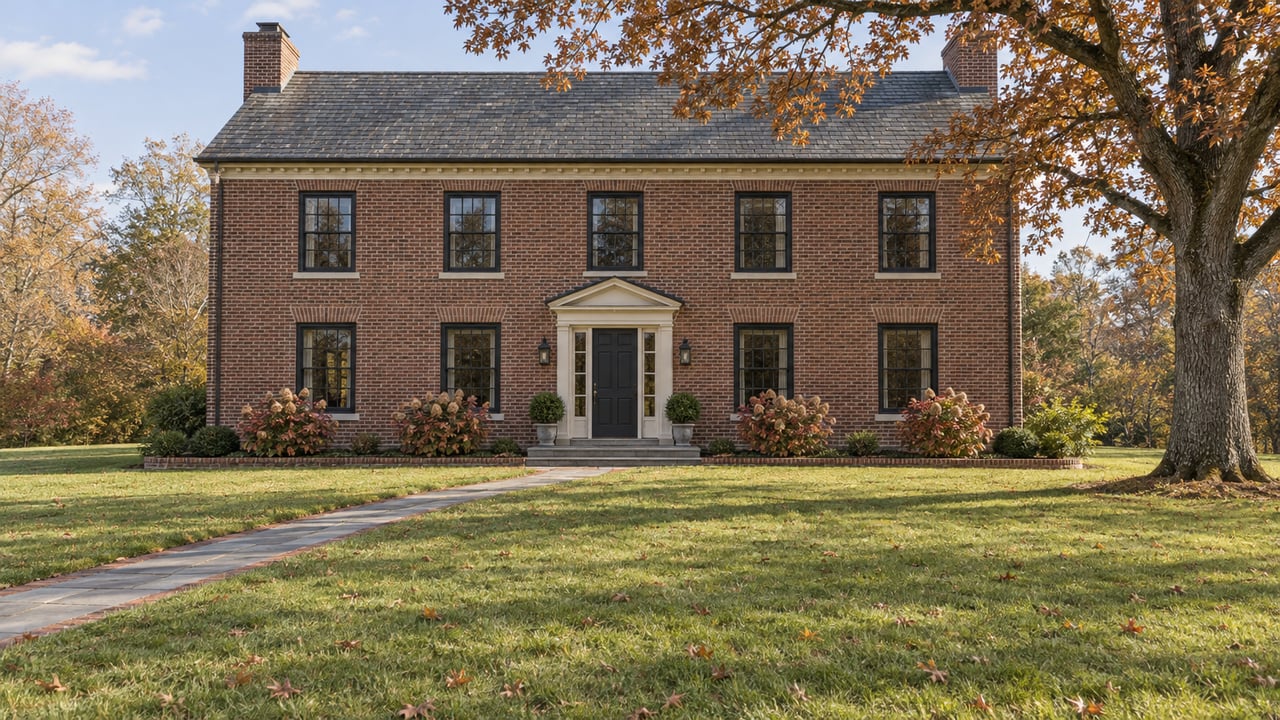
Before You Buy a Potomac Teardown, Find Out Which Side of the Sewer Line It's On
November 5, 2026
November 5, 2026
In April 2024, county soil testers dug into a lot on Ridge Drive in North Glen Hills and hit groundwater 12 inches below the surface. That was too wet to keep testing for a conventional septic system. A WSSC Water low-pressure sewer main already ran along nearby Valley Drive, and it had room for one more house. The owner proposed to reach it through a private easement. Under the county's Potomac sewer rules, that route didn't count. In its March 2025 transmittal, the County Executive recommended sewer approval for that lot only on the condition that WSSC approved a main extension along a public right-of-way.
On much of Potomac's large-lot land, the county's sewer category and the space a septic system needs set a firmer limit than zoning or budget. That limit is set one parcel at a time, and on October 27, 2026, it moved for one Potomac neighborhood.
Every property in Montgomery County carries a water category and a sewer category, according to the Department of Environmental Protection's service area categories page.
According to DEP's septic systems page, the county's standard calls for an initial septic field plus three reserve fields.
Statewide, Maryland reformed its universal BAT mandate in 2016. BAT, or best available technology, refers to advanced septic treatment units.
On Potomac's edges, the Potomac Peripheral Sewer Service Policy addresses parcels at the edge of the planned sewer envelope, which is the area mapped for future public sewer. The county considers these parcels case by case, according to the county's 2025 category change review packet. The policy has always excluded certain areas, including the Piney Branch subwatershed and the Greenbriar Preserve neighborhoods.
The two Ridge Drive cases in North Glen Hills show how this works. Both carry Rockville mailing addresses but fall within the Potomac Subregion planning area. On the first lot, there was a sewer main with spare capacity nearby. The connection still failed the public-right-of-way test. On the second, the County Executive recommended denying S-3 and keeping the lot in S-6, even with its septic constraints. A possible sewer extension of roughly 1,600 feet existed only as a concept and would need a WSSC hydraulic analysis.
These decisions take time. According to DEP's category change request page, a request on the administrative track typically gets a public hearing within four to seven months of the application, and a request on the County Council track typically gets one within five to ten months. A buyer who plans on a category change is planning on months of review with no guaranteed outcome.
For 24 years, the Palatine of Potomac neighborhood was also on the excluded list. The 2002 master plan assumed that the low-pressure sewer system serving its 141 lots had no room for more connections. Owners of adjacent properties kept applying anyway, and the Council kept deferring their cases. Those deferrals led WSSC Water to study the system. At the October 12 committee work session, Council staff noted that capacity had been the only reason for the exclusion, and that WSSC Water's analysis found capacity in the system.
On October 27, 2026, the Council adopted the 2026–2035 Water and Sewer Plan as Resolution 20-1249. Its Appendix C reads:
"A recent study performed by WSSC Water showed that the limited number of properties that could satisfy the peripheral service policy requirements could receive public sewer service without affecting the balance of the neighborhood's low-pressure system or requiring any low-pressure main replacements. Given this updated information, the Palatine of Potomac exclusion from the peripheral sewer service policy is removed."
The Council-approved plan still goes to the Maryland Department of the Environment for final review and adoption. That review has changed a plan before. After the Council adopted its last plan update, MDE denied part of its abutting mains policy.
These are the Potomac-area cases the County Executive's August 25 transmittal listed as deferred:
| Case | Address | Request | Tied to |
|---|---|---|---|
| WSCCR 24-TRV-01A | 11905 Centurion Way | Service for an existing residence | Peripheral policy questions |
| WSCCR 24-TRV-03A | 12720 Piney Meetinghouse Rd | Relief for a failed septic system | Peripheral policy questions |
| WSCCR 25-TRV-05A | 12721 Piney Meetinghouse Rd | Proposed single residence | Peripheral policy questions |
| WSCCR 20-TRV-09A | 20014 Piney Meetinghouse Rd | One single residence | Abutting mains policy |
Resolution 20-1249 changes the policy. It doesn't decide any of these four cases. The fourth case faces a separate rule. The County Executive's 2026 plan transmittal includes MDE's revision to the abutting mains policy.
Glen Hills follows the same pattern. The Council's Glen Hills sewer policies, approved March 8, 2016, keep onsite septic as the main method of wastewater disposal. The policies address public sewer service to relieve documented septic failures. Owners there can ask DEP for a septic survey. DEP and DPS then assess the property and send their recommendations to the Council.
The county also helps pay for repairs. Its July 2026 Bay Restoration Fund guideline says failing systems may qualify for grants. The guideline lists a $466.40 repair-permit fee and a $65.25 recordation fee as excluded. For routine maintenance, DEP's private well and septic page offers a $100 pump-out rebate. Owners apply within 90 days of pumping, submit a receipt, and can claim once every five years.
For a buyer, this means a lot whose system works may have fewer routes to sewer than a lot whose system has failed. A seller should have the categories, the septic permit history and any survey results ready before the first showing.
This post is general information about county and state rules, not legal, financial or engineering advice. Confirm how these rules apply to a specific property with the county agencies, a qualified septic professional or an attorney.
If you're weighing a Potomac teardown, an addition or a septic-served listing, Bernstein Homes can help you find the property's water and sewer categories and permit history before you set a price or make an offer. Schedule a Consultation, and we'll start with the property's water and sewer categories and its permit history.



Bernstein Homes's commitment to staying ahead of market trends and providing unparalleled service has earned them respect of clients alike, leading to strong and long-lasting relationships.

BERNSTEIN HOMES OF COMPASS
7200 WISCONSIN AVE STE 100 BETHESDA MD 20814