Kalorama's Median Price Is Really Two Numbers, and the Gap Is the Whole Story
September 10, 2026
September 10, 2026
Ask what a home costs in Kalorama and you'll get an answer that sounds almost fraudulent. One tracker puts the closed-sale median for Sheridan-Kalorama at $890,000 in December 2025, down 72 percent from the same month a year earlier. Read that cold and it sounds like a neighborhood in free fall. It isn't. It's a market so thin that one or two mansion sales can swing an entire month's median, and the same neighborhood posted a listing median north of $2 million just a few months later.
That whiplash is the actual story here, more than any single price point. "Kalorama" is not one housing market wearing one name. It's two adjoining historic districts, each with its own building stock, its own permitting rules, and its own price behavior, and most searches never tell you which one you're looking at.
The neighborhood sits on a hill above Dupont Circle, bounded roughly by Rock Creek Park, Massachusetts Avenue, Florida Avenue, Connecticut Avenue, Columbia Road, and Calvert Street. Inside those boundaries are two formally separate historic districts that most listing portals collapse into a single "Kalorama" tag.
East of Connecticut Avenue is Kalorama Triangle, designated a historic district in 1987 with a period of significance running from 1893 to 1939. This is where developers built rowhouses and multi-unit apartment buildings for a comfortable middle class as streetcar lines and new bridges over Rock Creek made the area accessible. Much of that stock has since converted to condos and co-ops. As of March 2026, condos in Kalorama Triangle carried a median price of $515,000, with active listings ranging from $294,900 to $2,750,000.
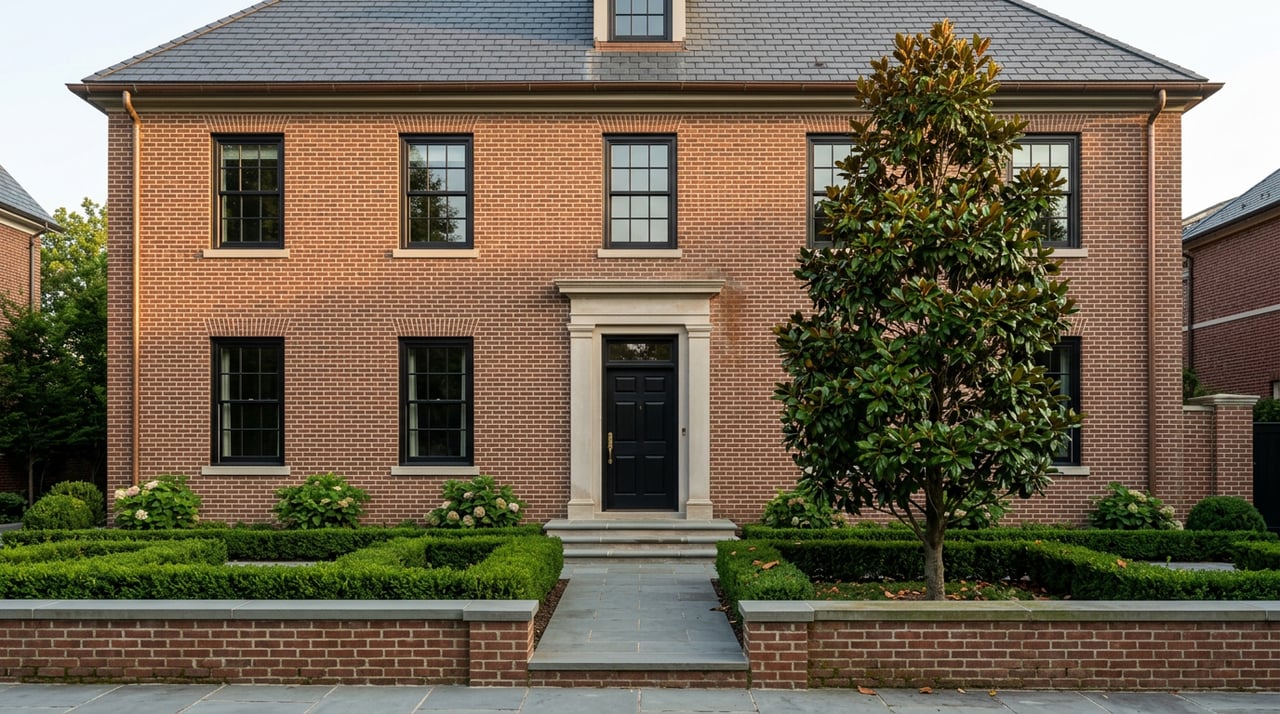
West of Connecticut Avenue is Sheridan-Kalorama, designated in 1989 with a period of significance from 1890 to 1945. This is the mansion corridor, where large, individually commissioned houses gave way in the 1920s and 1930s to embassy and chancery use. Lots are bigger, turnover is slower, and a single sale can move the whole submarket's numbers for a month.
Kalorama takes its name from an estate the poet and diplomat Joel Barlow purchased in 1807, from the Greek for "beautiful view."
The name has stuck to both halves ever since, which is exactly the problem. A buyer comparing "Kalorama" to Dupont Circle or Georgetown without specifying which district they mean is comparing a condo market to an estate market and expecting the arithmetic to line up.
| Kalorama Triangle | Sheridan-Kalorama | |
|---|---|---|
| Housing stock | Rowhouses, prewar apartment conversions, condos and co-ops | Detached mansions, embassies, large single-family homes |
| Historic district designated | 1987 | 1989 |
| Period of significance | 1893–1939 | 1890–1945 |
| Recent price signal | $515,000 median condo price, March 2026 | $890,000 closed-sale median, December 2025 (thin volume) |
| Typical turnover | Steadier, more frequent listings | Lumpy, low volume, price-per-sale sensitive |
Neighborhood-wide, the blended numbers land somewhere in between and mean less than either half on its own. As of May and June 2026, trackers combining both districts put the overall Kalorama listing median around $2.27 million, with homes spending a median of roughly 41 days on market and a price per square foot near $803. Those blended figures are directionally useful for a first pass, but they flatten a $515,000 condo and a multimillion-dollar embassy-adjacent estate into a single line, which is how you end up with a "72 percent decline" that isn't actually a crash.
Both historic districts fall under Historic Preservation Review Board oversight, but what that means in practice depends heavily on what you're buying and what you plan to do with it.
Interior renovations that don't change a building's exterior appearance typically bypass HPRB entirely and go straight through the standard DC Department of Buildings permit process. Redo a kitchen inside a Kalorama Triangle co-op or a Sheridan-Kalorama mansion, and in most cases nobody at HPRB ever sees the plans.
The line moves the moment you touch the outside. Propose any of the following and HPRB review kicks in before a building permit can even be filed:
That review typically adds six to twelve weeks to a project timeline, and the addition itself is a real budget line. Full renovations that include a rear addition in this part of the city commonly run $400,000 to $750,000 or more, with the range driven as much by how much HPRB coordination the project requires as by square footage. For a Kalorama Triangle buyer who just wants a new bathroom, this is a footnote. For a Sheridan-Kalorama buyer planning a rear addition or a garage conversion, it belongs in the offer strategy from day one, not discovered after closing.
This isn't theoretical. In April 2026, Invariant CEO Heather Podesta and filmmaker Stephen Kessler listed their Beaux-Arts home in Kalorama for $6,195,000, a 6,800-square-foot, seven-bedroom property with a main house and a two-story carriage house. The home was designed by architect Albert H. Beers and built by Louis Emmert in 1911, later serving as the Sullivan School military prep academy and, starting in the 1970s, the Field School. Podesta had owned it since 2013.
That single listing illustrates the Sheridan-Kalorama side of the ledger well: original architectural detail, a documented building history stretching back over a century, and a price point that makes sense once you know which district you're standing in. It also illustrates why HPRB review matters here specifically. A home with this kind of pedigree and this kind of exterior character is exactly the type of property where a buyer's renovation plans will run into the review process described above.
Other addresses tell the Kalorama Triangle side of the story just as clearly. Buildings like 2029 Connecticut, a Beaux-Arts building designed by Hunter and Bell and completed in 1917, and The Brighton, built in the same early-1900s wave, now function as condo and co-op stock with price points a fraction of the mansion corridor's, even while sharing the same historic-district protections on their exteriors.
Kalorama has almost no retail of its own. What commercial life residents rely on sits just outside the district's borders, in Adams Morgan and near Dupont Circle. What the neighborhood does have internally is walkability and a handful of genuinely distinctive landmarks: the Spanish Steps connecting Decatur Place to 22nd Street, the Woodrow Wilson House Museum, and a set of decorated historic police and fire call boxes that residents' associations have worked to preserve. None of that shows up in a median price, but it shapes who a given block appeals to and how a buyer should weigh proximity to those two commercial corridors against the quiet of the district itself.
Before comparing a Kalorama listing to anything else on your shortlist, confirm three things: which historic district the address sits in, whether the property is a converted condo or co-op versus a detached single-family home, and whether any renovation plan you're bringing to the table touches the exterior. That third question determines whether you're looking at a standard Department of Buildings timeline or one with HPRB review built in. Financing tends to follow the same split. Jumbo mortgages and cash purchases are common on both sides, but unique properties on the Sheridan-Kalorama side can create appraisal challenges and longer underwriting timelines simply because there are fewer comparable sales to draw from.
Do I need Historic Preservation Review Board approval to renovate a kitchen in Kalorama? Generally no. Interior renovations that don't change a building's exterior appearance typically go through the standard DC Department of Buildings process without HPRB involvement.
What's the practical difference between Kalorama Triangle and Sheridan-Kalorama? Kalorama Triangle, east of Connecticut Avenue, is dominated by converted apartment buildings, co-ops, and condos. Sheridan-Kalorama, to the west, is the mansion and embassy corridor with larger lots and a much thinner sales volume, which is why its month-to-month price figures can swing sharply.
Why did one report show Sheridan-Kalorama prices dropping 72 percent? That figure reflects closed sales in a single month, December 2025, in a submarket where very few transactions happen at all. One or two high-value sales falling out of the comparison can move the median that dramatically without reflecting a broader shift in value.
If you're weighing a Kalorama purchase or preparing one of these properties for sale, the district and the exterior scope of any planned work change the math before you ever get to a number. Joseph Bernstein and the Bernstein Homes team work across both Kalorama Triangle and Sheridan-Kalorama and can walk through what a specific address means for price, timeline, and renovation potential. Schedule a Consultation to talk through your specific address before you make an offer.
Bernstein Homes's commitment to staying ahead of market trends and providing unparalleled service has earned them respect of clients alike, leading to strong and long-lasting relationships.
BERNSTEIN HOMES OF COMPASS
7200 WISCONSIN AVE STE 100 BETHESDA MD 20814