Your Guide to Kalorama Single Family Homes in DC
June 11, 2026
June 11, 2026
If you are dreaming about a grand single-family home in Kalorama, it helps to know that you are not shopping one simple neighborhood. You are entering one of Washington’s tightest and most nuanced luxury markets, where block, housing type, lot size, and historic character can change your options fast. With the right expectations, you can narrow your search, budget wisely, and move with confidence when the right home appears. Let’s dive in.
A big first step is knowing that Kalorama includes two distinct submarkets. Sheridan-Kalorama is the area most buyers mean when they talk about detached luxury homes in Kalorama, while Kalorama Triangle has a much heavier mix of rowhouses, attached homes, and apartment buildings.
That distinction matters because the housing stock, pricing, and search strategy can look very different depending on where you focus. If your goal is a true detached house with a more estate-like feel, Sheridan-Kalorama is usually the more relevant benchmark.
According to the DC Office of Planning, Sheridan-Kalorama developed with a more suburban character in some sections, especially west of 23rd Street and north of Wyoming Avenue. The area is known for hilly terrain, contoured streets, and individually designed detached houses built for affluent owners who had cars.
By contrast, Kalorama Triangle includes many rowhouses, attached 3- and 4-story houses, and apartment buildings, with fewer detached homes. For a buyer targeting a larger standalone residence, that means Kalorama Triangle is often less useful as a pricing or inventory guide.
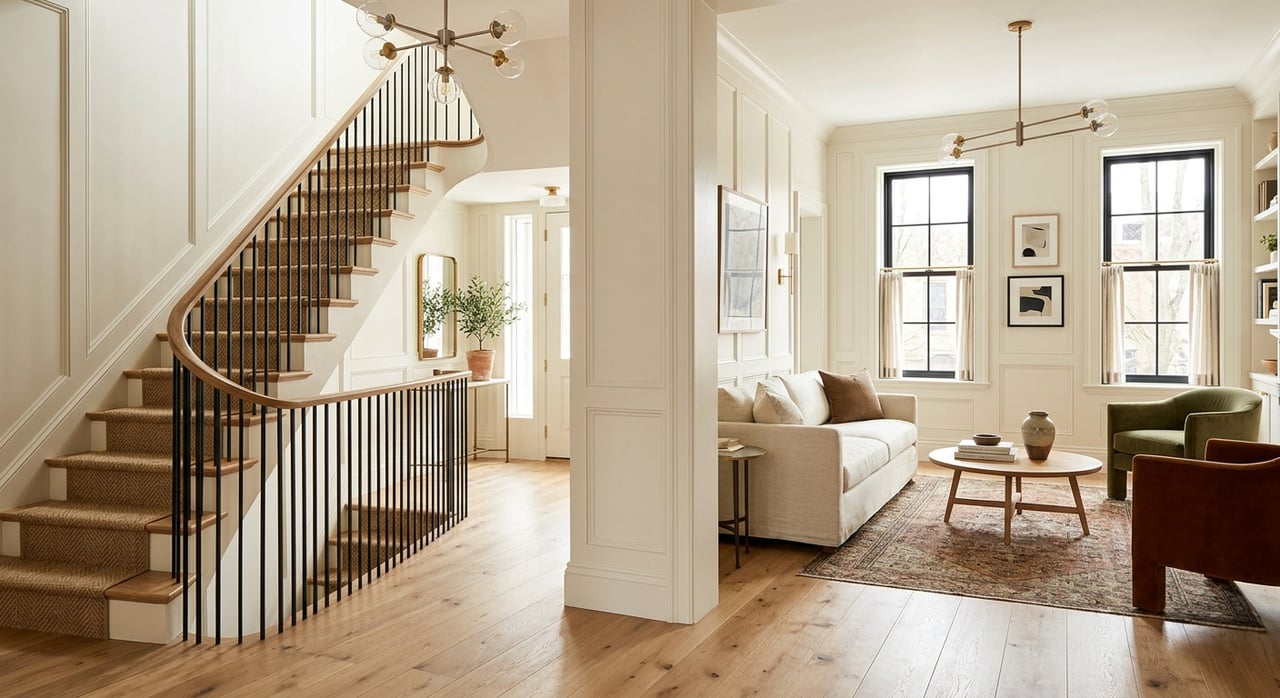
Kalorama’s single-family homes are not cookie-cutter. The neighborhood’s historic development created a broad mix of architectural styles, and many homes have a strong visual identity that can be a major part of their appeal.
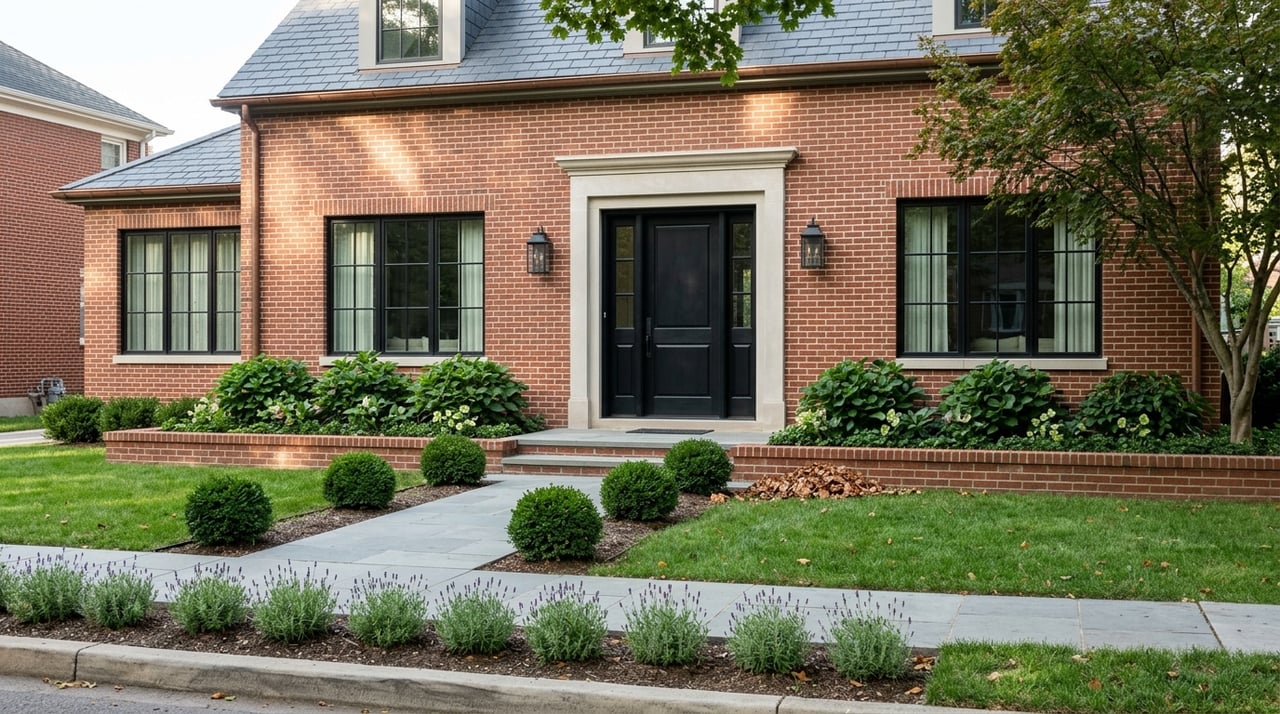
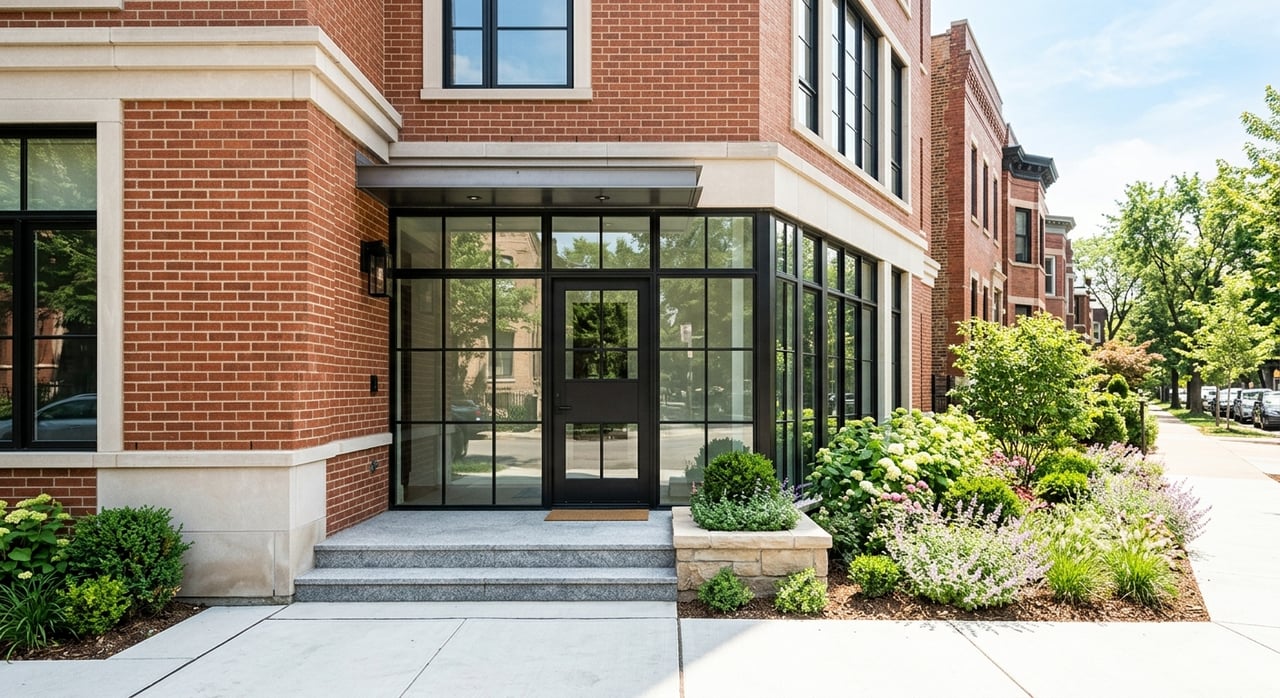
Official district materials reference styles such as Romanesque, Georgian Revival, Colonial Revival, Federal Revival, Beaux-Arts, Mission and Spanish Colonial Revival, Arts and Crafts, and Victorian or Queen Anne influences. You may also notice recurring details like red brick, stone trim, columned porticos, dormers, red tile roofs, and exposed rafters.
One of Kalorama’s biggest draws is that houses often feel designed rather than mass-produced. That can be exciting if you want a home with presence and architectural character.
It also means no two listings are truly interchangeable. A home’s block, orientation, layout, level of updating, outdoor space, and parking setup can have a major impact on value.
Even in the detached-home sections of Kalorama, lots are generally urban in scale rather than suburban in scale. If you are relocating from a more spread-out luxury market, this is one of the most important mindset shifts to make early.
Recent property examples show lots around 1,920 square feet, 2,400 square feet, 4,860 square feet, 6,098 square feet, and 6,750 square feet. Larger estate-style parcels do exist, but they are the exception, not the norm.
Urban lot size does not always mean you lose functionality. Many Kalorama homes still offer valuable setbacks, garden space, garages, or motor-court style parking.
In a market this competitive, those features can materially affect both desirability and price. If parking or private outdoor space is important to you, make that part of your must-have list before you start touring.
One of the biggest mistakes buyers make is using broad neighborhood pricing to estimate what a detached house will cost. Zillow’s broad Kalorama home-value index was $1.37 million in April 2026, but that figure includes multiple property types and is not a reliable budget guide for a true single-family search.
The current detached-home inventory tells a more useful story. On Zillow’s Kalorama single-family page, there were only three active listings, priced at $3.575 million, $3.599 million, and $8.75 million.
If you are targeting a real detached single-family home in Kalorama, the active entry point is already in the mid-$3 million range. From there, pricing can move quickly into the $5 million-plus category for homes that are larger, more finished, or more architecturally significant.
By comparison, attached homes can enter at a lower price point. One current example, 1903 Kalorama Rd NW, is listed at $1.65 million on a 1,920-square-foot lot.
Kalorama also has a very high ceiling. Public estimates on large homes in the neighborhood reach well into eight figures, with recent examples around $12.3 million and $29.1 million.
That range is part of what makes Kalorama challenging to shop. You are not just choosing a neighborhood. You are choosing among highly specific properties in a very thin inventory pool.
Kalorama is a scarcity market for detached homes. With only three current single-family listings in the market snapshot, buyers should expect long search windows followed by moments where they need to act quickly.
This is not usually a market where you can assume a similar replacement property will show up next week. If you miss the right house, it may take time for another one with similar scale, condition, and location to appear.
Recent neighborhood data for Sheridan-Kalorama Historic District showed a median sale price around $1.7 million, roughly 23 days on market, and a sale-to-list ratio near 98.7%. While that figure reflects the broader district rather than only grand detached homes, it still supports the idea that well-positioned properties do not linger indefinitely.
For buyers, the practical takeaway is simple: prepare before you tour seriously. In Kalorama, readiness is part of your competitive edge.
It can help to look at Kalorama alongside other upscale DC neighborhoods. That gives you context for both price and inventory, especially if you are deciding how flexible to be on location.
Georgetown currently shows more single-family supply than Kalorama, with 13 single-family results compared with Kalorama’s three. Spring Valley also has a somewhat larger detached-home pool, with 14 single-family results and a higher broad home-value index than Kalorama.
The broad takeaway is that Kalorama’s detached-house market is thinner and more block-sensitive than Georgetown or Spring Valley, while still sitting at the high end of the city’s single-family market. That can make it appealing if you value architectural character and rarity, but it also makes the search less forgiving.
Observatory Circle and Woodland-Normanstone Terrace are even tighter and more expensive in some respects, while Cleveland Park is much more affordable and serves a different segment of buyers. In practical terms, Kalorama occupies a distinctive lane: elite, limited, and highly specific.
Because inventory is so limited, you need to know what matters most before the right listing hits the market. This is especially true in a neighborhood where two homes at similar price points may offer very different tradeoffs.
A strong search plan should define what you want in terms of block, house type, parking, outdoor space, and renovation tolerance. Without that clarity, it is easy to lose time comparing homes that are not actually substitutes for one another.
Before you start touring seriously, it helps to decide:
These answers shape not only your home search, but also your budget and timing strategy.
In a market like Kalorama, preparation is not about rushing. It is about reducing hesitation when a strong opportunity appears.
That means lining up financing early, understanding your comfort level on condition and updates, and being realistic about the tradeoffs that come with historic, high-character homes in a dense urban setting. If you wait to sort out your priorities after a listing hits, you may already be behind.
A focused buyer strategy usually includes:
That kind of preparation can help you stay calm, even in a very tight inventory environment.
Kalorama is one of those neighborhoods where broad citywide data only gets you so far. The detached-home market is too limited, too varied, and too block-specific for a generic search approach.
You benefit from guidance that can help you separate true comparables from misleading ones, understand why one home commands a premium over another, and evaluate how features like parking, setbacks, gardens, and architectural pedigree affect value. In a market this specialized, local context matters.
If you are planning to buy a single-family home in Kalorama, working with an advisor who understands neighborhood-specific inventory, luxury buyer expectations, and the tradeoffs between character and condition can make the process much more efficient. When you are ready to build a focused search strategy, connect with Bernstein Homes for tailored guidance in DC’s high-end residential market.
Bernstein Homes's commitment to staying ahead of market trends and providing unparalleled service has earned them respect of clients alike, leading to strong and long-lasting relationships.

BERNSTEIN HOMES OF COMPASS
7200 WISCONSIN AVE STE 100 BETHESDA MD 20814