Living in West End DC: Your Walkable Luxury Guide
April 16, 2026
April 16, 2026
If you want a polished DC lifestyle where daily errands, dining, transit, and green space are all within easy reach, West End deserves a close look. This neighborhood offers a very specific kind of luxury that feels more urban and full-service than traditional. In this guide, you’ll learn what living in West End is really like, what kinds of homes you’ll find, and how the area compares with nearby neighborhoods. Let’s dive in.
West End is located in Ward 2, between Georgetown and Downtown. According to the DC Office of Planning, Foggy Bottom and West End sit between Georgetown and Downtown and include a mix of historic townhouses, apartment buildings, and office buildings.
That setting shapes the feel of the neighborhood right away. West End is not a quiet, low-density pocket made up mostly of detached homes. Instead, it feels like a central, mixed-use part of the city where residential buildings, hotels, offices, and everyday conveniences all sit close together.
Washington.org also describes West End as just west of Georgetown, with Foggy Bottom and West End forming a pocket neighborhood near the Potomac. For many buyers, that location is a big part of the appeal because it places you near major employers, cultural destinations, and some of DC’s most established urban neighborhoods.
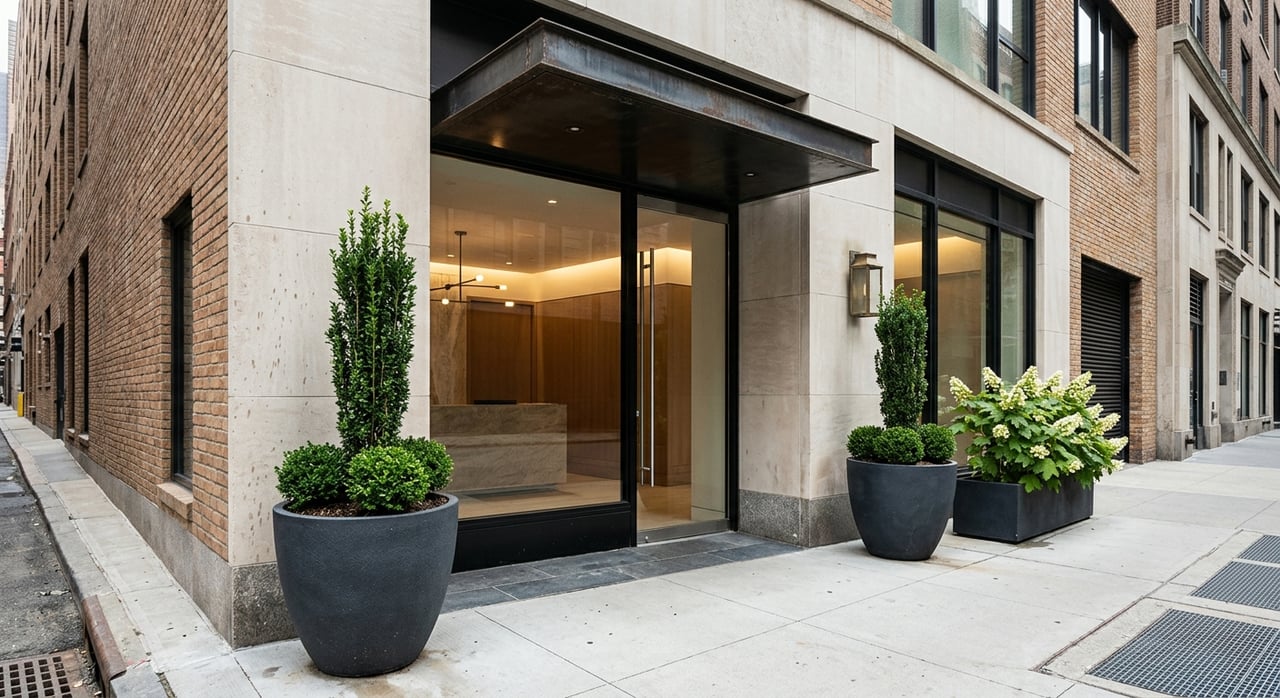
In West End, luxury usually looks like amenity-rich condo living rather than large detached homes or long blocks of classic rowhouses. The neighborhood’s modern identity is tied closely to redevelopment, mixed-use projects, and full-service residential buildings.
A strong example is West End Square 37, which includes 164 luxury residences in a LEED Gold building. DC’s DMPED says that mix includes 71 condominiums averaging about 1,800 square feet and 93 apartments averaging about 1,300 square feet.
Another notable example is The Columbia Residences, a 225-unit luxury condominium project built from the former Columbia Hospital for Women site. The project added ground-floor retail along with features like a rooftop pool and fitness center, which helps explain the kind of high-service lifestyle many buyers associate with West End.
If you are comparing neighborhoods, this is an important distinction. West End’s luxury story is less about yard space and more about convenience, design, building services, and access to a refined urban routine.
Most buyers looking in West End should expect a market led by condos and apartments, especially in newer or redeveloped buildings. While some historic housing remains, the neighborhood’s current housing stock is shaped far more by vertical living than by traditional rowhouse blocks.
That pattern can be a real advantage if you want a lock-and-leave home. A condo in West End may offer building staff, fitness amenities, shared outdoor spaces, retail on the ground level, and a lower-maintenance lifestyle than a standalone home.
Redevelopment in the neighborhood also tends to combine residential space with public or civic uses. For example, West End Square 50 pairs residential development with a new fire station and a public squash facility. That kind of layered development reflects how West End often blends residential, retail, and public functions in one compact setting.
One of West End’s clearest strengths is how easy it is to move through daily life without relying heavily on a car. The neighborhood offers access to transit, dining, cultural destinations, and practical services in a relatively compact area.
The West End Library serves West End and Foggy Bottom and is also a primary library location for eastern Georgetown and southern Dupont Circle. That may sound like a small detail, but it speaks to the area’s role as a central neighborhood with shared amenities that serve multiple parts of the city.
Transit access is another major draw. George Washington University notes that the Foggy Bottom-GWU Metro station on the Orange, Blue, and Silver lines is on campus, and residents can also use Metro, bus, and bike share to move around the city. The nearby Dupont Circle station adds Red Line access, giving many West End residents more than one practical rail option.
For buyers who want to get to offices, airports, meetings, or dinner plans with less friction, that connectivity matters. It is one of the reasons West End is often seen as a neighborhood built around convenience as much as luxury.
Even though West End feels urban, it still offers access to major outdoor space nearby. The southern tip of Rock Creek Park is part of the broader West End and Foggy Bottom area, according to Washington.org.
The National Park Service says Rock Creek Park spans 1,754 acres and includes more than 32 miles of hiking trails. That gives residents a meaningful green counterbalance to the neighborhood’s dense, built environment.
Washington.org also highlights nearby attractions such as the Kennedy Center, the State Department, Rasika West End, and Blue Duck Tavern. Park Hyatt describes itself as a West End hotel near Washington Circle and the White House, within reach of GWU, the Kennedy Center, and Dupont Circle. Taken together, those references reinforce the neighborhood’s identity as a place where dining, hospitality, culture, and daily convenience are tightly woven together.
West End is not the most expensive nearby neighborhood, but it does sit in the upper tier of the local market. According to Redfin’s West End housing market data, the neighborhood’s median sale price was $880,000 in February 2026, up 20.5% year over year.
That pricing places West End above some nearby options but below Georgetown. In the same Redfin report, Dupont Circle posted a median sale price of $520,000, Foggy Bottom came in at $350,000, and Georgetown reached $1.726 million.
For buyers, that creates an interesting middle position. West End may offer a more upscale and service-oriented housing profile than Foggy Bottom or Dupont Circle, while still coming in below Georgetown’s price level.
One of the most important things to understand about West End is that pricing can vary widely from one property to the next. Redfin reports recent neighborhood sales ranging from a $305,000 one-bedroom condo to a $3.867 million three-bedroom home.
That spread reflects how much building quality, square footage, views, finish level, and amenities can influence value here. Two homes in the same neighborhood can feel very different if one is in an older building with fewer services and the other is in a full-service luxury development with premium amenities.
If you are shopping in West End, it helps to compare not just price per square foot, but also the building experience. In this neighborhood, the building itself is often a major part of what you are buying.
West End tends to be a strong fit if you want a turnkey, urban lifestyle with easy access to transit and neighborhood conveniences. Based on the area’s housing stock and location, it can be especially appealing for professionals, frequent travelers, downsizers, and buyers who prefer a full-service building over a home with a yard.
It can also work well if you want to stay close to Georgetown, Dupont Circle, and Downtown without living directly in one of those areas. The neighborhood’s central position gives you flexibility, while its condo-forward market supports a more lock-and-leave style of ownership.
On the other hand, West End may be less ideal if your top priority is a classic rowhouse setting or a more purely residential neighborhood feel. The DC Office of Planning makes clear that this is a mixed-use environment shaped by apartments, offices, hotels, and redevelopment.
If West End is on your shortlist, a few practical questions can help you narrow your options:
These questions matter because West End is not just about location. It is also about choosing the version of urban luxury that fits your lifestyle best.
West End stands out as one of DC’s clearest examples of walkable luxury. It blends central location, transit access, parks, dining, and full-service residential living in a way that is hard to replicate elsewhere in the city.
If you are looking for a neighborhood that feels upscale, connected, and easy to navigate day to day, West End is worth serious consideration. And if you want expert guidance comparing West End condos, nearby luxury neighborhoods, or the right fit for your next move, Bernstein Homes is here to help.
Bernstein Homes's commitment to staying ahead of market trends and providing unparalleled service has earned them respect of clients alike, leading to strong and long-lasting relationships.

BERNSTEIN HOMES OF COMPASS
7200 WISCONSIN AVE STE 100 BETHESDA MD 20814