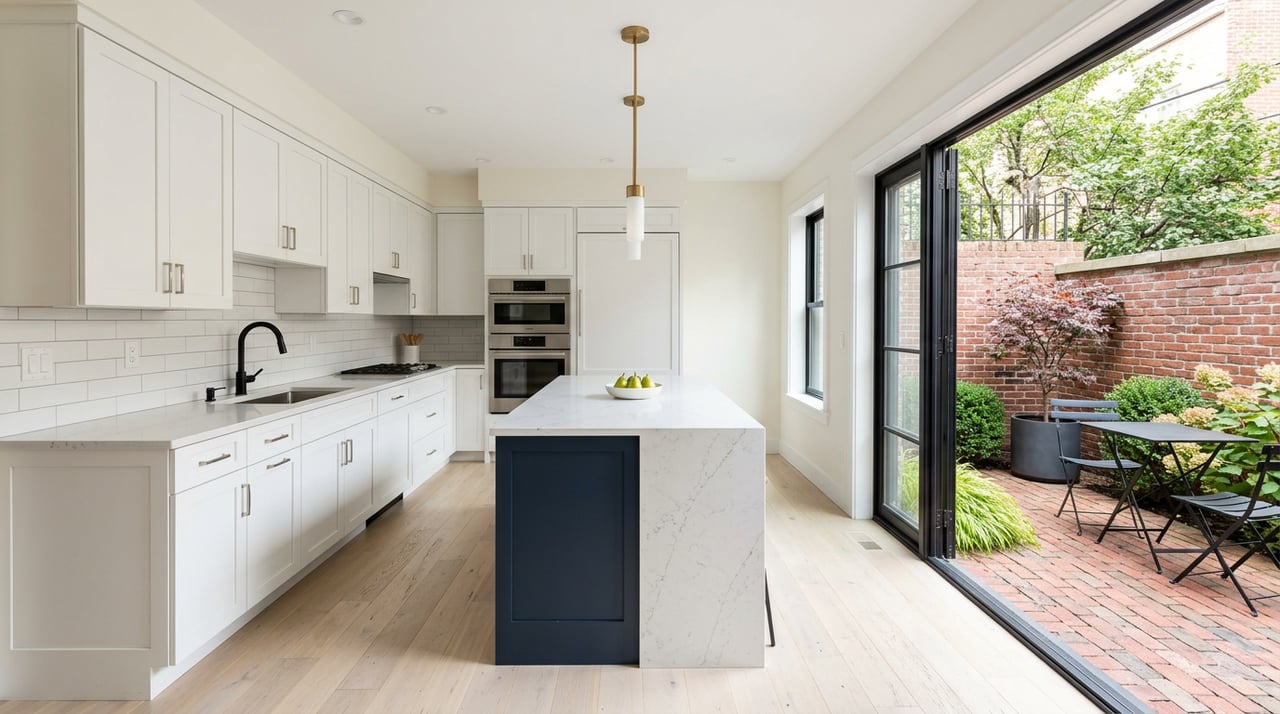
Torn between a classic Georgetown rowhouse and a sleek condo? You are not alone. In a neighborhood where history meets high design, choosing the right property type comes down to lifestyle, budget, and how much control you want over your home. In this guide, you will compare real costs, rules, renovation timelines, parking, and long‑term value so you can feel confident about your choice. Let’s dive in.
Georgetown price snapshot
Georgetown is one of D.C.’s highest‑value neighborhoods. Redfin reported a median sale price of about $1.8M in January 2026, with prices per square foot in the high hundreds. Rowhouses span a wide range, from roughly $1M for smaller or entry homes to $6M+ for larger, restored properties with parking and gardens. On the condo side, older or smaller units can start in the high six figures, while boutique and luxury projects can reach several million. At the very top, branded residences have sold at record prices, sometimes matching or exceeding townhome values.
Inventory across close‑in D.C. neighborhoods stayed tight in 2024–2025, and luxury buyer activity remained steady. That backdrop matters if you want a move‑in‑ready home or plan to renovate, since timing and competition can affect both purchase and project costs.
Cost of ownership: rowhouse vs condo
Property taxes in D.C.
D.C. residential property is generally taxed at 0.85% of assessed value. Class 1B properties (no more than two units) use a split rate where value above a published threshold is taxed at $1.00 per $100. As a quick example, a $1.8M home at 0.85% would be about $15,300 per year, or roughly $1,275 per month, before any deductions. Always confirm the current rate and your property’s assessed value when you budget.
HOA and condo fees
Condo fees usually cover master insurance, exterior and common‑area care, building utilities for shared spaces, management, security, and amenities like a gym or pool, plus reserves for big repairs. In Georgetown, fees vary by building and service level. Many amenity‑rich buildings show fees in the low to mid‑thousands per month, with examples around $1,500 to $1,700 for larger or serviced properties. Smaller or low‑amenity buildings can be lower. Treat every building as unique.
Insurance differences
- Condo owners typically carry an HO‑6 policy for interior finishes, personal property, liability, and loss‑assessment coverage. The association’s master policy covers the structure and common elements as defined in the condo documents.
- Rowhouse owners carry a homeowner policy (HO‑3 or HO‑5) covering the entire structure and personal property. You are responsible for roof, facade, and all building systems.
Maintenance and predictability
- Rowhouse: You pay for routine and capital work. Older historic homes often need specialized masonry, window, or roof care, which can cost more.
- Condo: Monthly dues pool costs and may make your budget feel more predictable. Associations can still levy special assessments if reserves are low, so review the reserve study and recent assessment history before you buy.
A quick monthly cost sketch
Use your target property to build a real budget. As a starting outline:
- Mortgage principal and interest (based on price, down payment, and rate)
- Property tax: example $1.8M × 0.85% ≈ $15,300/year, about $1,275/month
- HOA/condo fee if applicable: examples often $1,500+/month in amenity‑rich buildings, lower in smaller buildings
- Insurance: HO‑6 for condos vs HO‑3/HO‑5 for rowhouses
- Utilities, internet, and a maintenance reserve
Renovations, rules, and approvals
Historic district review in Georgetown
Exterior changes visible from public space usually require Old Georgetown Board review, and may involve the Commission of Fine Arts and D.C. permitting. Plan for added design constraints, monthly meeting cycles, material standards, and longer timelines. This affects window replacements, roof decks, facades, front stoops, and rooftop equipment.
Condo governance and financing impact
Condo value and risk depend on the building’s financial health and rules. Before you buy, review the budget, reserve study, insurance declarations, board minutes, special assessments, delinquency rates, and any litigation. Lenders also review owner‑occupancy, single‑owner concentration, commercial space, and insurance. If a project fails certain tests, it may be considered non‑warrantable, which can limit conventional financing and require a larger down payment or a portfolio loan. If you plan to use FHA financing, confirm whether the building is FHA‑approved or eligible for a single‑unit approval.
Interior changes and timing
- Rowhouse: You control interiors and many systems, but exterior work visible from the street must pass historic review. Build review time and preservation‑grade material costs into plans.
- Condo: Interior changes may be faster, though you must follow building rules, hours, and material standards. You cannot alter common elements without association approval.
Lifestyle and value tradeoffs
Rowhouse: pros and cons
Pros
- Private outdoor space such as a yard, garden, terrace, or roof deck (when allowed)
- Greater control over your home and land component, which can support long‑term value in a supply‑constrained historic area
- Single‑owner occupancy without shared walls above or below in many cases
Cons
- You fund all exterior and major capital maintenance
- Historic review adds time and cost for visible exterior changes
Condo: pros and cons
Pros
- Lower day‑to‑day maintenance, since the association handles exterior and common areas
- Amenities like concierge, gym, pool, and enhanced security
- Predictable monthly living for many owners
Cons
- Monthly HOA dues can be significant in amenity‑dense buildings
- Rules for pets, rentals, and renovations
- Assessment risk if reserves are low, and possible financing limits if the project is non‑warrantable
Parking and access
Street parking in Georgetown is competitive, with Residential Permit Parking zones and strong demand. Some rowhouses have garage or alley parking, which is rare and valuable. Many condos include assigned garage parking, sometimes for an extra fee or as a separately deeded space. Confirm parking rights, guest policies, and any fees before you write an offer.
Resale outlook and liquidity
Fee‑simple rowhouses include land, and in a historic, built‑out neighborhood, that scarcity can support long‑term value. Condos depend more on building quality, governance, and the amenity package. At the top end, luxury branded residences can rival or surpass townhome pricing. Keep in mind that condo liquidity can be sensitive to financing shifts, high HOA dues, or litigation, while restored rowhouses often attract owner‑occupants with different priorities.
Your Georgetown due‑diligence checklist
For any property
- Pull recent sold comps for the same block and property type
- Request the seller’s renovation and permit history, plus any open or expired permits
- Confirm the current assessed value and estimate property taxes using the published D.C. rate
If you are buying a condo
- Obtain and review the full resale package: budget, reserve study, insurance declarations, board minutes for 12–24 months, assessment history, litigation, rental policies, declaration and bylaws
- Ask your lender to confirm whether the project is warrantable for conventional financing; if you plan to use FHA, check the building’s FHA status
- Review the master insurance declarations and claims history, and confirm what your HO‑6 must cover
If you are buying a rowhouse
- If you plan exterior work, consult Old Georgetown Board guidance early and estimate review timelines and likely conditions
- Verify recorded parking rights and any shared easements; parking can be a material part of value
Red flags
- Condos: low reserves, recent large special assessments, high delinquency in dues, or major ongoing litigation
- Rowhouses: unpermitted exterior work, unresolved facade or structural issues, or signs of deferred exterior maintenance
Which is right for you?
Choose a rowhouse if you want privacy, outdoor space, and full control, and you are comfortable managing maintenance and historic approvals. Choose a condo if you value low‑maintenance living with services and amenities, and you prefer predictable monthly costs through HOA dues. If you plan to finance with FHA or need flexible lending, confirm a building’s status early. If you plan a roof deck or facade changes, plan for OGB timing and costs.
If you would like tailored guidance on a specific address or building, our team is happy to walk you through real comps, carrying costs, and renovation paths. Reach out to Bernstein Homes to compare live listings and build a plan that fits your lifestyle.

FAQs
What is the median home price in Georgetown right now?
- As of January 2026, Redfin reported a median sale price of about $1.8M for Georgetown, with prices varying by property type, size, condition, parking, and location.
How much are typical Georgetown condo fees?
- Fees vary by building and services; many amenity‑rich properties show dues in the low to mid‑thousands per month, with examples around $1,500 to $1,700, while smaller buildings can be lower.
How do D.C. property taxes work on a $1.8M home?
- At a base residential rate of 0.85%, a $1.8M assessed value is about $15,300 per year (roughly $1,275/month) before any applicable deductions, with Class 1B using a split rate above a set threshold.
What is the Old Georgetown Board and why does it matter?
- The Old Georgetown Board reviews exterior changes visible from public space; approvals add design constraints and time, affecting projects like windows, roof decks, facades, and rooftop equipment.
What makes a condo non‑warrantable and why does it matter?
- High delinquency, low reserves, too much commercial space, litigation, or owner‑occupancy issues can make a project non‑warrantable, which can limit conventional financing options and raise down‑payment needs.
Do I need different insurance for a condo vs a rowhouse?
- Yes; condo owners carry an HO‑6 policy for interiors and personal property while the association covers the shell, and rowhouse owners carry HO‑3 or HO‑5 that covers the entire structure.
Is parking usually included with Georgetown homes?
- It depends; some rowhouses have garages or alley spaces and many condos offer assigned garage parking, often with a fee, so verify what is deeded or assigned before you make an offer.